What Happens When a Personal Alarm Goes Off (Both Sides)

TLDR
When a SureSafe personal alarm triggers, your parent is connected to help immediately and you receive a GPS location and a direct call at the same time. Here is how that plays out from both ends.
Most families researching personal alarms focus on the practical details. Battery life, waterproofing, whether it works outside the home. Those things matter. But the question that tends to come up just before a purchase decision is harder to answer from a spec sheet: what actually happens when the alarm goes off, on your parent’s end and on yours?
Below is what happens from the moment of a fall, on your parent’s end and on yours.
When a Fall Happens Away From Home
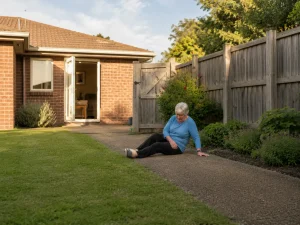
A fall in the garden or on the way to the letterbox is one of the more common scenarios families don’t plan for. The phone is inside, there’s nobody nearby, and getting up isn’t possible.
The SureSafeGO ‘Anywhere’ Alarm has an automatic fall detection sensor that senses a fall and activates the emergency sequence without the wearer needing to press anything. Once triggered, a two-way voice connection opens through the device so your parent can speak and hear a response while still on the ground.
How Fall Detection Triggers an Emergency Alert
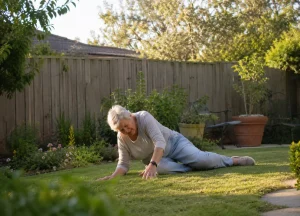
Not every fall leaves the wearer in a position to press a button. The automatic fall detection on the SureSafeGO ‘Anywhere’ Alarm works by sensing a fall and the stillness that follows, triggering the emergency sequence without waiting for the wearer to do anything. When both happen together, the device treats it as a fall and triggers the emergency sequence without waiting for the wearer to do anything.
For older Australians living alone, that removes the single biggest gap in a standard personal alarm, which only activates when someone is conscious and able to press a button.
What You and Your Parent Experience When the Alarm Triggers
When the SureSafeGO ‘Anywhere’ Alarm triggers, an SOS text message is sent to all nominated emergency contacts simultaneously, each containing a Google Maps link with your parent’s GPS location. The alarm then calls the first contact on the list. If that call goes unanswered, it moves to the second, and continues through up to five contacts until someone picks up.
Once the call connects, the two-way voice function allows you to speak directly with your parent through the device, without your parent needing to find a phone or describe where they are.
What Happens If Nobody Answers the First Call
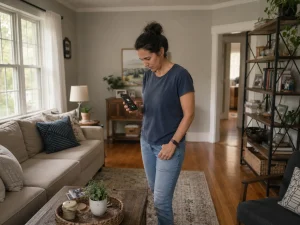
The alarm calls through up to five nominated emergency contacts in sequence until someone picks up. All five also receive the SOS text with your parent’s GPS location at the same time the calls begin, so even if a call is missed, the location information is already there.
For families who want a professional response layer on top of that, SureSafe’s optional 24/7 monitored service connects the alarm directly to a trained monitoring team who can coordinate emergency assistance at any time of day. It is available as an add-on at $35 per month.
Why a Mobile Personal Alarm Matters Beyond the Home
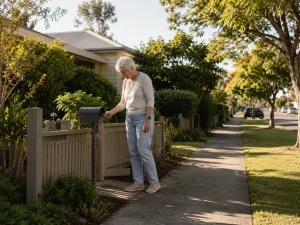
Many personal alarm systems are designed around the home, requiring a base unit or landline connection to function. That works indoors but leaves your parent unprotected the moment they step outside.
The SureSafeGO ‘Anywhere’ Alarm operates on the Telstra 4GX mobile network with no base unit and no landline required. It provides the same level of protection at home, in the garden, or on a morning walk. Telstra’s 4GX network covers the vast majority of where Australians live and travel, so coverage gaps are rarely a concern in everyday situations. When the alarm triggers, the GPS location sent to emergency contacts shows exactly where your parent is at that moment.
A Personal Alarm Only Works If It’s Already On
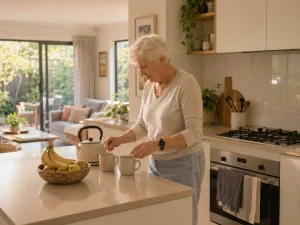
The sequence above only plays out the way it should because the device was already there before anything went wrong. A medical alert device with automatic fall detection and GPS location tracking is only useful if your parent is wearing it when something happens. Getting one before it’s needed is the only way the sequence above plays out the way it should.
View the SureSafeGO ‘Anywhere’ Alarm or the SureSafeGO PLUS 4GX SmartWatch to find the right fit for your parent, or call the team on 1300 739 991 if you’d like help deciding.
Frequently Asked Questions
Does a Personal Alarm Work Outside the Home?
Yes. The SureSafeGO ‘Anywhere’ Alarm operates on the Telstra 4GX mobile network with no base unit or landline required, which means it works anywhere in Australia with mobile coverage, including gardens, footpaths, and public spaces.
What If My Parent Falls and Cannot Press the Button?
The automatic fall detection on the SureSafeGO handles this. The built-in sensor detects a fall and triggers the emergency sequence without any input from the wearer, which is particularly important if your parent is unconscious or unable to reach the button.
How Many People Get Notified When the Alarm Goes Off?
All nominated emergency contacts receive an SOS text with your parent’s GPS location simultaneously. The alarm then calls through up to five contacts in sequence until someone picks up. The optional 24/7 monitored service adds a professional response team as an additional layer at $35 per month.
Can a Personal Alarm Be Funded Through NDIS or a Home Care Package?
Yes, in many cases. SureSafe is an NDIS-approved supplier and personal alarms fall under Assistive Technology or Consumables funding depending on your plan. Recipients of a Home Care Package may also be eligible. Call the team on 1300 739 991 for guidance on your specific situation.